When a person falls down before you, the space between panic and action is very small. Express CPR courses exist to shut that space fast, without dragging you via days of technical concept you will never ever make use of on the street or in a workplace.
In a few focused hours, a well run fast first aid course or express CPR course can turn an onlooker right into an efficient very first responder. Not a paramedic, not a physician, but a tranquil pair of hands who understands what to do in the essential initial minutes.
I have actually trained thousands of individuals in first aid and CPR, from childcare employees and tradies to office groups that did not really wish to be there. The pattern is constantly the very same: individuals show up worried they will certainly not bear in mind anything, and leave stunned by how much functional ability they can build in one morning.
This overview goes through what you genuinely discover in express CPR training and fast first aid courses, how those brief classes are structured, and which faster ways are secure versus which are not.
What "Express" Really Means in CPR and First Aid Training
Many individuals search for "fast first aid course near me" or "fast CPR correspondence course" since they require a first aid certificate for work, or their child care credentials is about to end. Others just know their focus span will not survive a 8 hour lecture.
In technique, express first aid or express CPR courses are usually:
- Condensed in duration, usually 2 to 4 hours for CPR only, or half a day for combined first aid and CPR courses. Focused on core life conserving abilities and evaluation, with theory completed ahead of time online. Highly functional, with many time spent on manikins, circumstances, and teacher feedback. Designed for fast certification without sacrificing the nationally needed performance criteria in your region.
The trick distinction is not what abilities you discover, but just how the discovering is structured. A traditional complete day first aid training class will cover concept, discussion, and method in the very same space. An express first aid course presses a lot of the theory into pre course eLearning so that class time is hands on.
If you are available in having really completed the on the internet components, the "express" part functions extremely well. If you click through the theory without taking note, the useful session can feel overwhelming. The course size did not fail you, the preparation did.
Core Abilities You Can Anticipate From an Express CPR Course
A well run express CPR training session is firmly concentrated. By the end, you must have the ability to:
- Recognise a heart attack promptly and call for aid early, including making use of neighborhood emergency numbers correctly. Perform premium quality breast compressions at the best deepness and price, and minimise interruptions. Use a defibrillator (AED) confidently, including pad positioning and safety checks. Combine compressions with breaths utilizing an obstacle tool, or switch to compression only CPR when appropriate. Work as part of a small team, turning compressors and coordinating with spectators till emergency situation solutions arrive.
Those sound like simple points, but doing them under tension takes method. In the training space, good instructors will recreate a bit of that anxiety in a regulated means. They may begin the timer, go back, and claim nothing while you choose whether to tremble, shout, call, or press first. That little uncomfortable time out is willful. It compels you to lead, not just comply with instructions.
Underneath those heading skills, there is a set of micro skills that truly matter in real life first aid and CPR:
You find out just how to identify agonal breathing, those uneven gasps that are commonly incorrect for typical breaths. You obtain utilized to kneeling for several minutes of compressions, not just twenty practice presses. You exercise just how to move garments, area AED pads, and start the shock cycle without shedding your rhythm.
Express CPR courses can not cover every clinical subtlety, but they definitely can embed those habits.
How Express CPR Matches Wider Fast First Aid Courses
Many individuals combine CPR with more comprehensive first aid in one sitting, either with express first aid courses or packaged first aid and cpr training classes. In those combined layouts, the CPR component is usually the most tightly assessed part of the day.
A fast first aid course that consists of CPR will commonly structure the moment like this, with some variation between carriers:
First, a brief wrap-up of the DRS or ABCD activity plan you ought to currently have actually seen in your pre discovering. After that, a deep useful dive into CPR on adult manikins, typically complied with by infant and child manikins if the course includes family or child care content.
Only when those practical abilities really feel strong do instructors commonly move onto various other fast first aid subjects like choking, hemorrhaging control, burns, and standard clinical emergencies.
From a trainer's point of view, this sequencing is purposeful. CPR is both literally requiring and emotionally exhausting. If you leave it throughout of the express first aid training, individuals are worn down, and the high quality of compressions drops.
When you see course summaries that state "first aid and CPR course," "first aid and CPR training classes," or "fast first aid courses," they typically describe this type of combined framework: CPR as the core skill, with other first aid layered around it.
What You Really Practise, Action by Step
A lot of people presume CPR courses are simply a person analysis off a PowerPoint while you half heartedly press on a manikin. Excellent express cpr training is much more physical and specific.
During a strong session, you can anticipate to resolve a series of drills that slowly pile:
Scenario entrance: You come to a manikin that stands for a collapsed person. You check for threat, present yourself, and evaluate responsiveness. The instructor may duty play a troubled spectator or worried family member to add realism.
Breathing assessment: You practice opening up the respiratory tract, trying to find typical breathing, and calling for aid. Here, teachers usually correct little yet essential habits, like tilting the head too far back in babies or investing as well long checking for breaths.
Compression strategy: You invest focused time available positioning, arm lock, depth, and price. Many manikins currently have responses systems that reveal if compressions are as well shallow or also slow-moving. You will really feel the difference in between exhausted compressions and fresh ones. That experience matters when you encounter an actual individual who is not responding.
Adding breaths: Once your compressions look solid, you include rescue breaths, typically with a face guard or pocket mask. Lots of people struggle at first with creating a seal or supplying enough air without over inflating. This is where rep makes the difference.
AED combination: Finally, you integrate everything with an automatic exterior defibrillator. You practice turning it on, complying with the motivates, attaching pads on adult and infant manikins, removing before the shock, and resuming compressions promptly.
By the end of an express cpr course, you need to be able to move through those actions without quiting to remember what follows. You might still really feel nervous, but you will have a physical memory of kneeling next to a "person" who required you to act.
Key Differences for Express Child Care First Aid and CPR
If you deal with youngsters or hold duty for infants, you must not rely only on grown-up cpr training. Express childcare first aid courses focus on circumstances and strategies details https://rentry.co/5nyetnfc to babies and youngsters, where composition and threats differ.
In express child care first aid training, you still discover the core series of analysis, compressions, and AED usage, yet with different details:
Compressing a tiny upper body with two fingers as opposed to your complete body weight. Adjusting the head tilt for an infant so express first aid Perth you do not narrow the air passage. Recognising choking in a toddler who may not be able to speak or signal plainly. Taking care of usual childcare injuries like drops, burns from hot fluids, or poisoning from home products.
An express child care first aid course often feels more mentally intense for moms and dads and instructors. Instructors need to permit room for that, while grounding every little thing in useful repeating. You will spend extensive time with baby manikins, and typically run through numerous brief child care certain situations, from playground occurrences to sleep time emergencies.
If you are determining between basic express first aid courses and express child care first aid courses, use your day to day risk profile as the guide. A building employee requires various emphasis than a preschool instructor. Lots of carriers supply both, and some provide mixed express childcare first aid and CPR courses that satisfy regulatory demands for very early youth education.
How Short Is Also Short?
The wish for fast certification is easy to understand. No person wants their weekend break eaten by a course they view as a box ticking exercise. Yet there is a functional lower limit to just how "express" safe CPR and first aid training can be.
In my experience, anything under 90 mins of real, personally CPR practice time begins to feel rushed, particularly for very first time learners. Individuals require time for:
Initial nerves and clumsiness, particularly if they have never ever touched a manikin or seen an AED. Numerous practice cycles, including at least one lengthy constant round of compressions to really feel tiredness. Individual responses and correction, which takes some time when you have a team of 8 to 12 participants.
A really liable express CPR course might be set up for a couple of hours, with around half of that as pure hands on time. The remainder is spent assessing safety, addressing concerns, and analyzing participants.
Online only "fast CPR" or "fast first aid" choices that issue certificates without any functional evaluation are where top quality frequently falls off. They could satisfy some reduced degree plan requirement theoretically, yet they do not produce muscle memory, and they do not teach you exactly how it really feels when your very own adrenaline kicks in.
If you are comparing fast first aid training service providers, ask bluntly how many mins you will actually invest in the floor practising compressions and AED use. The answer must be a genuine number, not "we cover everything you require."
Choosing an Express CPR or First Aid Course That Still Has Substance
With so many cpr courses and first aid courses advertised as "express," "fast," or "combined," it can be difficult to inform which ones deserve your time and money.
To separate strong express cpr courses from shallow ones, look for:

- Accreditation or acknowledgment by your sector or regulative body, not just a generic "certificate of conclusion." Clear reference of useful assessment, consisting of CPR on an adult manikin and, if pertinent, kid or baby manikins. A mixed distribution model, where first aid concept is finished online and class time is emphasised as hands on. Trainers with real field experience, such as paramedics, nurses, or skilled work environment first aid instructors. Course period that allows at least 90 minutes of sensible CPR, even in a fast cpr or fast first aid course.
If a company assures you a first aid certificate or CPR card "in under an hour" without leaving your workdesk, treat that as a recognition component, not a complete express first aid course. Those really brief, simply online items might refresh your memory, but they are not a substitute for pushing on a manikin till your arms melt a bit.
Fast certification is not inherently poor. The issue is when "fast" ends up being shorthand for "checkbox just." An excellent supplier is clear concerning the limitations of express first aid and cpr training, and will certainly advise a longer format if your duty needs greater competency.
What Concerning Refresher Courses?
Skills deteriorate with time. That is not a character flaw, it is just exactly how memory functions when we do not practise. Research study and long experience both show that CPR high quality goes down considerably within 6 to twelve month if you never ever utilize it.
This is why several offices https://blogfreely.net/naydieylpp/express-first-aid-training-structure-a-safer-office-quickly currently require regular fast cpr correspondence course, often annually, also if the official certificate could be legitimate for a longer period. Refresher formats are a best fit for express cpr training, because you are building on an existing base instead of beginning with zero.
An excellent refresher concentrates much less on training and more on testing, remedying, and upgrading. You could spend even more time on circumstances, work in teams, or practise variations like compressions only CPR. Instructors will certainly also upgrade you on any kind of modifications in guidelines, for example, modifications to suggested compression depth ranges or AED pad placement in special cases.
If your last first aid and cpr course was years ago, expect your initial refresher to really feel nearly like a full class once again. That is normal. After that very first return, much shorter annual refresher courses really feel genuinely "express" because the major patterns come back quickly.
How Much Concept Do You Truly Need?
One worry people commonly have with express first aid or express CPR courses is that they will certainly not "cover enough theory." This concern usually comes from an excellent area, yet it can be misplaced.
In an emergency, your brain does not have time to bear in mind the thorough physiology of cardiac output or the exact names of heart rhythms. What it requires is a handful of clear, basic guidelines that you can recall under stress.
For CPR, these rules are essentially:
If a person is unresponsive and not breathing typically, begin compressions and send out for an AED. Press set in the facility of the upper body, with minimal interruptions. Adhere to the AED prompts and keep going until emergency services take control of or the person recovers.
There is obviously a lot more subtlety, particularly in first aid courses that likewise cover shock, blood loss, strokes, bronchial asthma, or anaphylaxis. Express first aid training addresses that nuance with short, focused descriptions and scenarios, shortly lectures.
The method is understanding which concept matters for lay -responders and which does not. For instance:
You do require to understand the indications that suggest stroke, heart attack, or an allergy, because early recognition causes very early help. You do not require to memorise medication names or complicated analysis criteria.
You do require to know just how to keep and use an adrenaline car injector for anaphylaxis. You do not require 10 minutes on the pharmacology of epinephrine.
The ideal express first aid courses and express cpr courses will silently filter this for you. They will offer you enough background to make sure that the steps make sense and you trust them, but they will always bring you back to the concern, "What would certainly you in fact perform with your hands in this situation?"
The Physical Side of CPR That Courses Hardly Ever Advertise
One reality many people just discover throughout training is that CPR is hard work. After 2 minutes of high quality compressions, a lot of grownups are breathing greatly and their arms are drinking a little. In genuine cardiac arrests, spectators frequently proceed for 10 to 20 minutes until expert help arrives.
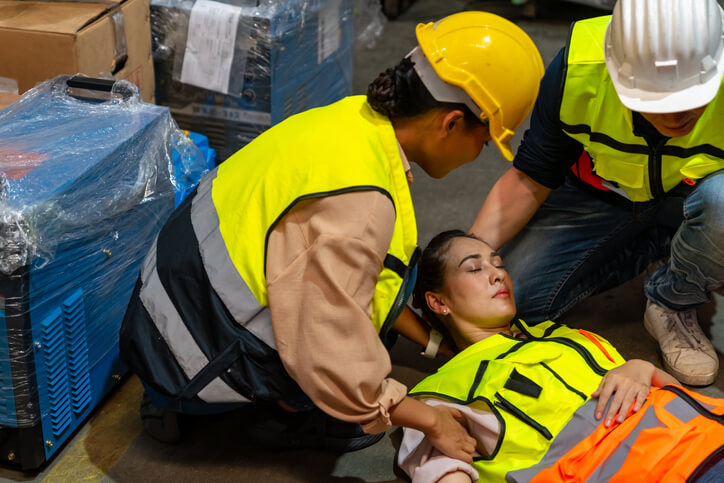
Express CPR training must prepare you for that physical load. That suggests not simply learning the right strategy when, however practicing via tiredness and discovering when to revolve with an additional rescuer.
If you are the only individual available, you also require strategies to manage your very own body:
Setting on your own up in a sustainable placement at the start, close sufficient to the breast that you can lean from your hips rather than pumping with your arms only. Using your body weight effectively so you are not wasting energy. Accepting that you will feel exhausted and sore and doing it anyhow, since incomplete CPR is still far better than no CPR at all.
In my classes, as soon as individuals reveal respectable method, I often state, "Keep going until I tell you to quit." I then allowed them benefit numerous mins beyond their comfort area. That experience is vital. A 2 hour express cpr course that includes even a couple of lengthy cycles such as this offers you a much more reasonable idea of what an actual apprehension will certainly feel like.
Certificates, Conformity, and Actual Competence
For many people, the primary chauffeur to reserve a fast first aid course or express cpr course is conformity. They require proof for a task, an expert registration, a visa application, or a work environment audit.
There is nothing incorrect with that said. A legitimate first aid certificate is part of just how organisations demonstrate that they take security seriously. The problem is when the certificate becomes the objective and actual capability is treated as optional.
When you select a company, ask on your own 2 inquiries:
Does this course satisfy the formal need for my function or sector? Does this course offer me adequate skill that I would certainly trust myself to act if an associate, kid, or stranger fell down before me?

A well organized express first aid or express cpr training session can do both. It can tick the box for regulatory authorities and really equip you to deal with emergency situations in your setting. You ought to leave with a certificate in your hand and the sensation that your time was well spent.
If the only thing you remember from your last fast first aid course is authorizing the participation sheet, it could be time to find a various trainer.
Making the Most of a Short Course
Express courses function best when participants make a little investment prior to and after the actual class.
Beforehand, take the pre course eLearning seriously. It is alluring to hurry via video clips and quizzes, but that theory establishes the phase for beneficial hands on time. Also half an hour of concentrated focus the night before makes a big difference. If your course consists of work environment specific content, consider the actual risks in your setting so you can ask targeted questions.
During the session, treat every scenario as if it were real. Speak out loud, utilize names when calling for help, and move with purpose. The more you submerse on your own, the more powerful the memory trace your brain creates.
After the course, quickly review your notes or the course handbook one or two times over the complying with week. If you have access to a training manikin at the office, even a few minutes of compressions every couple of months will certainly maintain the ability from fading.
Express first aid and CPR courses respect your time by concentrating on what issues most. If you meet that effort halfway, you can leave with self-confidence that when the worst happens, you will not be standing frozen, questioning what to do. You will certainly have a clear sequence in your head, evaluated with your own hands, all set to utilize when it counts.